BMI (Body Mass Index) Introduction
Body Mass Index, commonly known as BMI, is a widely used medical tool that helps evaluate body fat by comparing a person’s height and weight. The BMI formula is calculated by dividing body weight in kilograms by the square of height in meters (m²). Details about the BMI calculator formula are explained below.
What is the BMI (Body Mass Index) Calculator?
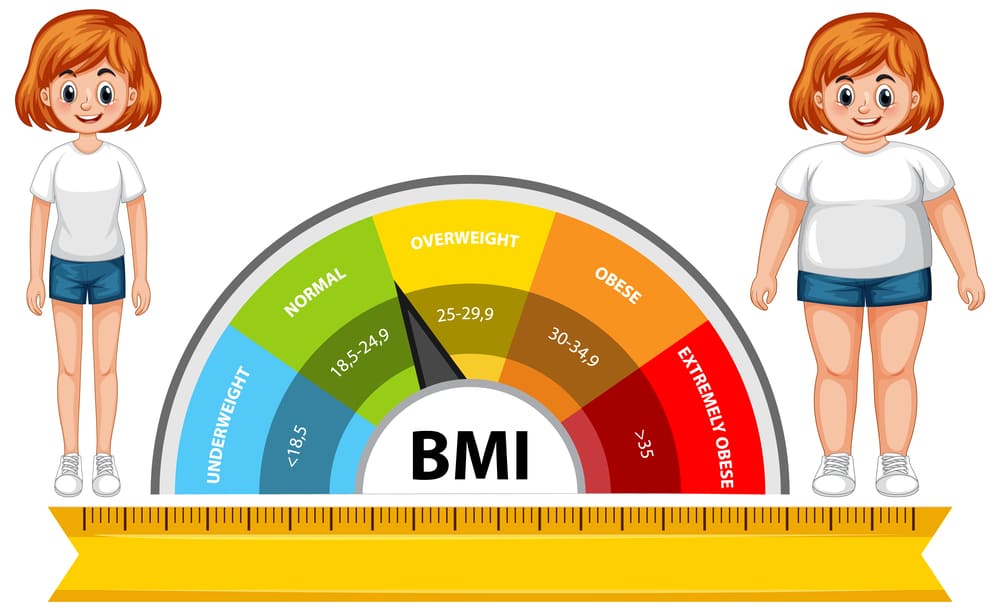
A BMI calculator helps determine an individual’s Body Mass Index. It evaluates body composition by comparing height and weight to estimate whether a person is underweight, healthy, overweight, or obese. BMI is commonly used to check if your body weight is appropriate for your height.
Based on the calculated BMI value, individuals are grouped into different weight categories. These BMI ranges may vary depending on factors such as age and region. Having a BMI that is too low or too high can affect overall health, and using a BMI calculator with age can help identify whether further health assessments are needed.
BMI table for children and teens, age 2-20
The Centres for Disease Control and Prevention (CDC) has categorized the ideal BMI percentile range for children and teens between the ages of 2 to 20 years.
|
| Underweight | <5% |
| Healthy weight | 5% – 85% |
| At risk of overweight | 85% – 95% |
| Overweight | >95% |
BMI Table for adults
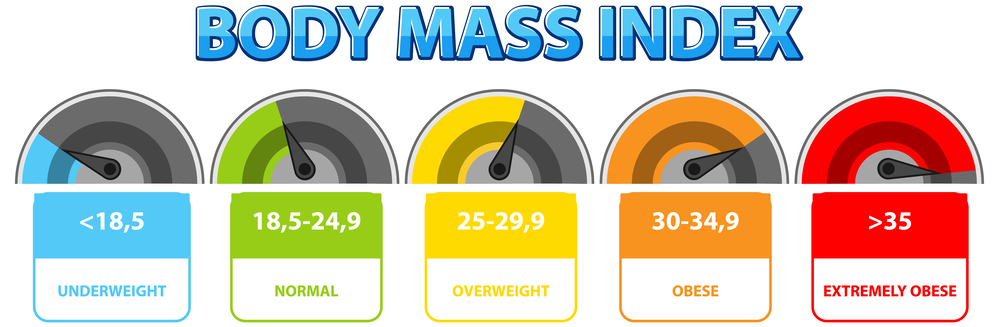
The World Health Organization (WHO) has recommended a BMI table for adults based on their body weight. Both men and women aged 20 or older can use this table.
| Classification |
BMI Range |
| Underweight |
Below 18.5 |
| Normal Weight |
18.5 – 24.9 |
| Overweight |
30 – 35 |
| Obese |
Above 35
|
What is the Ideal BMI for Men and Women?
There is no separate BMI calculator for men and women, as the BMI formula and healthy range apply equally to both. For adults, an ideal BMI range is 18.5 to 24.9, which is classified under healthy body weight.
Risks Associated with Being Underweight
If your BMI result falls under the underweight category, it may increase the risk of several health concerns, including:
- Malnutrition, anaemia, and vitamin deficiencies
- Weak bones and a higher risk of fractures due to osteoporosis
- Lowered immunity and frequent infections
- Growth and developmental issues, especially in children and adolescents
- Hormonal imbalances in women, which may affect the menstrual cycle and fertility
- Increased risk of miscarriage, as indicated by BMI calculator results for females
- Higher chances of complications during or after surgery
Being underweight is not healthy and, in some cases, may indicate an underlying medical condition such as anorexia nervosa. If your BMI is too low, it is advisable to consult a doctor for proper evaluation. A healthcare professional can recommend suitable treatment and a personalized diet plan to help bring your BMI back to a healthy range.
Risks Associated With Being Overweight
Similar to being underweight, being overweight has several associated risks:
- High blood pressure.
- High levels of low-density (LDL) cholesterol or bad cholesterol.
- Lower levels of high-density (HDL) cholesterol or good cholesterol.
- Type 2 diabetes.
- Stroke.
- Coronary heart disease.
- Gallbladder disease.
- Osteoarthritis is a joint disorder caused by the breakdown of joint cartilage.
- Sleep apnoea.
Higher chances of cancer. - Low quality of life.
- Certain mental disorders including anxiety, depression, and so forth.
- Body pain and difficulty in carrying out daily activities.
Being overweight poses much higher risks and leads to deleterious effects on your body. This is one of the main reasons why you should try and maintain a normal BMI range. In case your BMI falls under the overweight category, consult your doctor immediately.
How to Maintain a Normal BMI?
An ideal BMI for any individual should fall under the normal range. To maintain a normal BMI, you may have to inculcate:
- Healthy Eating Habits
- Focus on consuming a balanced diet including vegetables, fruits, whole grains, healthy fats, and lean proteins.
- Consume more protein and fibre.
Limit sugar, salt, and fat intake. - Avoid overeating and be mindful of your portion size.
Plan your meals and snacks in a way to avoid impulsive eating. - Consume at least 4 litres of water throughout the day.
- Maintain a calorie deficit for sustainable weight loss.
Regular Physical Activity
- Engage in moderate physical activity and aim to at least exercise for 150 minutes per week.
- You can also include walking, jogging, or swimming in your exercise regime to improve your cardiovascular health.
- Include strength training exercises to build muscle which can also boost your metabolism.
- Find activities that you enjoy the most.
Behavioural Changes
- Listen to your hunger signs and avoid distractions while eating.
- Eat your food slowly.
Sleep for at least 7-9 hours per day as poor sleep can also affect your hunger. - Avoid alcohol and smoking.
BMI Formula
If you are wondering how to calculate BMI in the first place, below are the simple equations in the International System of Units (SI) and the US Customary System (USC). Both the tools use a 5’10”, 160-pound individual as an example for calculation:
USC Units:
BMI = 703 × mass (lbs)height2 (in)= 703 × 160702= 22.96 kgm2
SI, Metric Units:
BMI = mass (kg)height2 (m) = 72.571.782 = 22.90kgm2
BMI Prime
The World Health Organization (WHO) and the Centers for Disease Control and Prevention (CDC) have introduced a measure known as BMI Prime. BMI Prime represents the ratio of an individual’s actual BMI to the upper limit of the standard “normal” BMI range.
It is important to note that this upper limit may vary by region. In most Asian countries, the normal BMI upper limit is considered 25 kg/m².
BMI Prime Formula:
BMI Prime = BMI ÷ 25
Since BMI Prime is a ratio of two BMI values, it does not have any units. For example, if a BMI calculator for men shows a BMI Prime value below 0.74, it indicates an underweight category. Values between 0.74 and 1 are classified as normal, while values above 1 indicate overweight.
| Severe Thinness |
less than 16 |
less than 0.64 |
| Moderate Thinness |
16 – 17 |
0.64 – 0.68 |
| Mild Thinness |
17 – 18.5 |
0.68 – 0.74 |
| Normal |
18.5 – 25 |
0.74 – 1 |
| Overweight |
25 – 30 |
1 – 1.2 |
| Obese Class I |
30 – 35 |
1.2 – 1.4 |
| Obese Class II |
35 – 40 |
1.4 – 1.6 |
| Obese Class III |
> 40 |
> 1.6 |
The primary advantage of BMI Prime is its ability to show how much an individual’s BMI deviates from the standard healthy range. Additionally, it allows for easy comparison between groups that follow different BMI upper limit standards.
Ponderal Index
The Ponderal Index (PI), similar to BMI, evaluates body composition by relating height and weight. However, unlike BMI which uses the square of height—PI uses the cube of height in its formula.
BMI is a convenient screening method but has limitations, especially when applied to large populations. PI, though more detailed and complex, offers better accuracy for people with extreme height variations.
Limitations of BMI
Although BMI is widely used to evaluate healthy body weight, it has certain limitations. BMI does not distinguish between fat, muscle, or bone mass, and does not account for individual variations in body composition. As a result, BMI alone may not accurately reflect overall health. For a more precise assessment, it should be combined with other measurements and health indicators.
In adults:
BMI is not a completely accurate measure because it reflects total body weight rather than specifically body fat. It can be influenced by factors such as age, gender, muscle mass, activity level, body fat percentage, and ethnicity.
For example, a BMI calculator for women may show a normal result even if she leads a sedentary lifestyle, meaning she could still have excess body fat despite a “normal” BMI. Conversely, athletes or bodybuilders may fall into the overweight category because muscle weighs more than fat, even though their body composition is healthy.
Keeping this into account, the CDC mentions:
Older adults have more body fat than younger adults with the same BMI.
Women have more body fat than men for similar BMI.
Muscular people or athletes may have higher BMI due to excess muscle
In children and adolescents:
Similar to adults, BMI also poses limitations among children and adolescents. In this age group, height and the level of sexual maturation can also influence BMI and body fat.
Limitations of BMI as a screening tool
BMI values do indicate risk of certain health disorders including Type 2 diabetes or other heart conditions. It cannot, however, be relied on completely as:
BMI does not take the location of body fat into account. For instance, fat stored in different areas of the body including the abdomen is linked to greater health issues than excess fat in the thighs.
BMI does not take a family history of diabetes, blood pressure, and heart disease into consideration.
In essence, BMI can be a great tool for indicating body fat for 90-9% population and can effectively be used along with other measurements to determine your healthy body weight.
Who Should Not Use This Tool?
BMI is not an ideal tool for athletes or people with high muscle mass and pregnant women.
Who discovered BMI?
The Body Mass Index (BMI), originally called the Quetelet Index, was developed by Belgian scientist Adolphe Quetelet as a purely mathematical concept. Its use as a health indicator began when American insurance companies adopted it to estimate obesity-related risks and adjust premiums, as obesity was linked to early mortality.
The World Health Organization (WHO) later observed that people of Asian descent tend to experience higher risks of chronic health conditions at lower BMI values compared to Europeans. Additionally, BMI often underestimates body fat in Asians relative to Europeans. For example, a Thai individual may have higher body fat and a greater risk of diabetes than an Italian individual with the same BMI.
WHO also noted that BMI may not reliably predict heart disease risk in minority populations. Factors contributing to heart disease appear at lower BMI levels in Black, Hispanic, and Asian populations compared to White populations.
Body Mass Index: how can it help us? Let us talk about it
BMI is a widely used tool because it is simple and easy to measure. It requires no special equipment, making it quick, inexpensive, and convenient. In busy medical practices, BMI is a popular method for categorizing patients efficiently. Despite its simplicity, BMI broadly correlates with the risk of various health conditions, making it a useful general screening tool.
How to Calculate BMI?
BMI= Weight [kg] / (Height)2 [m2]
For example, the BMI of a 70 kg man of 175 cm (1.75m) height will be
BMI= 70
1.75 x 1.75
BMI= 22.86 kg m-2
BMI categories
According to the WHO BMI value people can be categorised in 4 different categories 1. Severely Underweight- <16 (cases of starvation and anorexia) 2. Underweight – Below 18.5 3. Healthy weight – 18.5 – 24.9 4. Overweight – 25-29.9 5. Obese- > 30 6. Morbidly Obese->35-40
Classification of obesity based on BMI
1. Obese class I – 30.0-34.9
2. Obese class II- 35.0-39.9
3. Obese class III- ≥ 40
How to use body mass index?
Although BMI does not measure body composition directly, it is still a useful indicator for predicting weight-related health risks in large populations. The further a person’s BMI deviates from the normal range—whether underweight or overweight the higher their risk of developing health problems. This makes BMI a helpful screening tool.
BMI and pregnancy
A mother’s weight is considered critical for her baby’s survival. Pregnant women with a high BMI are at increased risk. Even a slight increase in a mother’s BMI was associated with an increased risk of fetal deaths, stillbirths, and infant deaths. It may also be a predictor of high blood pressure, diabetes, and preeclampsia, as fat cells produce inflammation within the body.
BMI and pregnancy
A mother’s weight plays a crucial role in her baby’s health and survival. Pregnant women with a high BMI face higher risks, as even a slight increase in BMI has been linked to a greater chance of fetal death, stillbirth, and infant mortality. High maternal BMI can also increase the likelihood of complications such as high blood pressure, diabetes, and preeclampsia, since excess fat tissue can trigger inflammation in the body.
Why is being fat bad?
Excess fat can accumulate in the blood, liver, pancreas, muscles, around the kidneys, and near the heart. This buildup affects how the body uses energy and puts extra strain on the heart and blood vessels. It can also interfere with the function of key organs like the liver and kidneys, impairing their ability to filter and detoxify the body effectively.
What is healthy? BMI alternatives
BMI alone is not always a reliable indicator of a person’s overall health. To get a more accurate assessment, it is important to consider alternative measurements and health indicators, such as:
Visceral fat measurement
- Waist circumference
- Genetic and metabolic assessments
- Waist-to-hip ratio or waist-to-height ratio
How to lower your BMI?
Losing weight is a journey, not a race.
Small lifestyle changes can have a big impact on lowering your BMI. Here’s how to approach it effectively:
- Set realistic goals: Start with just 5% of your current weight. For example, if you weigh 200 lbs, a 5% loss is 10 lbs. Losing this much can reduce your risk of diabetes by nearly 50% and also improve blood pressure. Once you reach that goal, aim for another 5%. Take it step by step and allow your body to adjust.
- Understand caloric density: To lose weight, you need to burn more calories than you consume. You don’t have to starve—just choose foods wisely. Caloric density is the number of calories in a certain weight of food. For example, 1 cup of raisins has 500 calories, while 1 cup of grapes has only 62 calories. Low-calorie, filling foods include Greek yogurt, egg whites, fish, watermelon, broccoli, popcorn, and skimmed milk.
- Exercise regularly: Aim for at least 150 minutes of exercise per week, roughly 20 minutes a day. Start slowly if you’re new, and gradually increase intensity. Cardio exercises like walking, running, biking, or swimming are great, but don’t skip resistance training lifting weights can burn more fat than cardio alone. A mix of both works best.
- Stay positive: Your mindset matters. Even small changes can make a big difference in your overall health. You may not do everything perfectly, but doing something consistently is what counts.
Conclusion
Due to today’s stressful lifestyle and environmental factors, obesity has become increasingly common. A BMI calculator in India is a useful tool to assess potential health risks. With your BMI results, Dr. Lavanyaa can help you understand what they mean, guide you toward a healthier lifestyle, and prevent possible complications.









 Views This Year : 743